
Neurodivergence and Queerness: Embracing Your Authentic Self
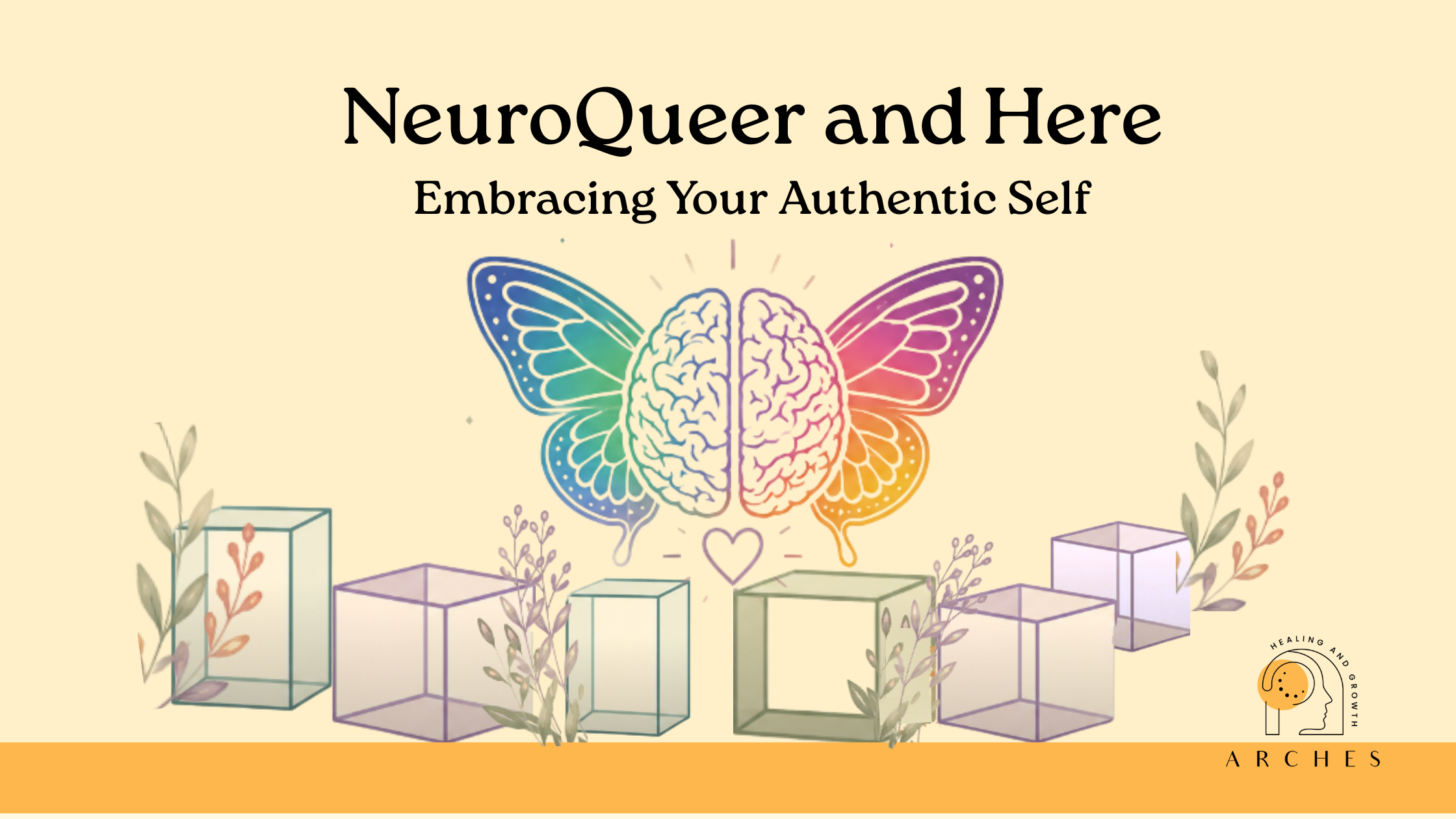
Written by Izzy Antley, CSW
If you've spent time in either the neurodivergent or LGBTQIA2s+ community, you've probably noticed there is a large overlap between the two. Researchers have consistently found that autistic people and individuals with ADHD are more likely than the general population to identify as sexually diverse or outside the gender binary.
While there isn't one simple explanation for this connection, one influence might be the experience neurodivergent and LGBTQIA2S+ share of living outside of society's expectations.
What Does Neurodivergent Mean?
Neurodivergency is not a clinically defined term. It was created to describe groups of people who experience and interact with the world differently than most other people. The word neurodivergent simply means that a person's brain works differently from what society considers "typical." This includes autism, ADHD, dyslexia, Tourette syndrome, and many other natural variations in how people think, learn, communicate, and process information.
For many people on the autism spectrum, social norms such as gender roles do not naturally make sense, which allows them to feel more comfortable questioning assumptions about gender, sexuality, relationships, and identity. This can lead to struggles in their interpersonal relationships and can also create a beautifully authentic self-presentation that allows more intimacy in their relationships.
What Is Neuroqueer?
The term neuroqueer was coined by autistic scholars Dr. Nick Walker, Athena Lynn Michaels-Dillon, and M. Remi Yergeau to describe the intersection of neurodivergence and queerness. It represents a perspective that challenges both neuronormativity (the expectation that everyone should think and behave in neurotypical ways) and heteronormativity/cisnormativity (the expectation that everyone should be straight and cisgender).
For some people, neuroqueer simply describes having both identities. For others, it allows an intentional practice of embracing the ways they naturally exist instead of trying to fit into rigid societal expectations.
Dr. Walker describes several ways for neuroqueer individuals to better understand themselves and their identities such as:
Exploring how your neurodivergence and queer identity influence one another.
Allowing yourself to express your gender, sexuality, creativity, or personality in ways that feel authentic.
Unlearning cultural messages about how you "should" think, behave, or present yourself.
Creating art, writing, research, or conversations that amplify neuroqueer perspectives.
Helping build communities that are more welcoming of neurodivergent and LGBTQIA2S+ people.
Ultimately, neuroqueering is about making space for your whole self.
What Does This Look Like in Everyday Life?
Neuroqueering doesn't require a grand declaration. Often, it shows up in small, intentional choices that allow you to live more authentically.
This might include:
Spending time in affirming LGBTQIA2S+ or neurodivergent communities.
Letting yourself stim, communicate, or move in ways that feel natural instead of masking.
Wearing clothes, hairstyles, or accessories that genuinely feel like you.
Creating art, music, writing, or other creative projects that express your experiences.
Journaling about different aspects of your identity and how they've shaped your life.
Having meaningful conversations with people whose experiences differ from your own.
Making time for activities that help you feel playful, creative, or fully yourself.
Practicing self-compassion when old feelings of shame or self-doubt arise.
Working with an affirming therapist to explore identity, relationships, or self-acceptance.
There is no "correct" way to be neurodivergent or queer. Your experience is uniquely your own.
The Complexity of Diagnosis
For some people, receiving a diagnosis of autism or ADHD can be validating. It provides language for lifelong experiences and may open the door to accommodations, services, and greater self-understanding.
For others, pursuing a formal diagnosis feels more complicated.
While it is common for many adults to worry about how diagnostic information could affect future healthcare, employment, insurance, or legal protections, it is especially prevalent among queer and transgender individuals navigating uncertainties in our current political climate. These concerns are real and deserve thoughtful consideration.
At the same time, children and some adults may need a formal diagnosis to access school supports, workplace accommodations, or specialized services.
There is no universally right decision. Whether you pursue a formal evaluation, choose self-identification while gathering more information, or simply begin exploring your experiences, your journey deserves respect.
You Don't Have to Fit Into Someone Else's Box
Whether you identify as neurodivergent, LGBTQIA2S+, both, or you're still exploring, remember that identities are not problems to solve. Identities should be chosen by the individual. They are parts of who you are.
Therapy isn't about making you "more normal." It's about helping you understand yourself with greater compassion, reducing shame, and building a life that reflects your values rather than society's expectations.
Authenticity isn't always easy, especially when you've spent years masking or trying to meet impossible standards. But little by little, choosing to show up as your genuine self can be one of the most healing things you do.
You deserve spaces where all parts of you are welcome. If you’re looking for additional support navigating challenges related to gender, sexuality, neurodivergence, or living a fulfilling life, Arches may be the right space for you. Contact us to schedule a consultation with one of our therapists or attend one of our groups!
